
Projects
Overflow Powerhouse Parramatta
Water finds no boundaries between river, landscape, architecture, image and body. This is Overflow.
Overflow
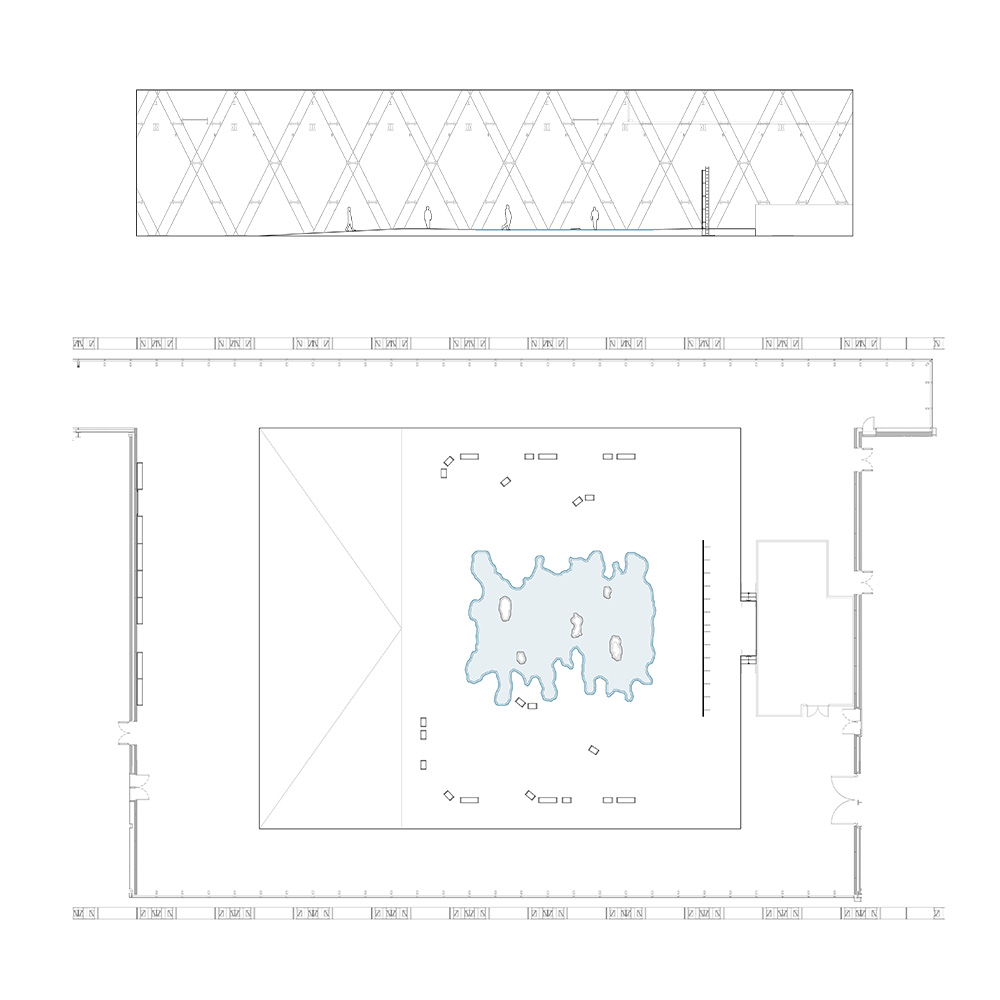
Overflow is a large-scale immersive installation designed by Tyrrell Studio for Powerhouse Parramatta. Formed from water, sculpted stone and light, it invites visitors to remove their shoes and enter a changing tidal terrain within the museum’s vast exhibition gallery.
One of five major exhibitions opening Powerhouse Parramatta, alongside projects by OMA*AMO, Es Devlin and OPEN Architecture, Overflow is First Nations-led and grounded in the living principles of Water Country. Concept creator Emily McDaniel brings together stories from seven Aboriginal organisations across New South Wales, exploring cultural practices including caring for species, fishing, water monitoring, flood mitigation, language and cultural water rights. These practices enter the gallery through films by Kamilaroi filmmaker Ivan Sen and are experienced within the physical installation designed by Tyrrell Studio.
The exhibition is visually, materially and conceptually connected to Tyrrell Studio’s permanent 3,000m² Powerhouse riverfront public domain, developed with cultural guidance and consultation with Baramadagal elders and Dharug community representatives as a gathering place on Water Country named Ngurra Budyari Ngalawagulang. Here, sandstone, vegetation and ephemeral pools connect the museum with the Parramatta River. Water Country moves from river to landscape to museum interior, while stories of Water Country from across New South Wales move in the opposite direction, becoming grounded on Country in Parramatta.
Together, riverfront and exhibition become a single proposition: Overflow.

Tyrrell Studio’s exhibition design works with stone, water and light. The design draws the stories of Water Country into the massive exhibition space through reflected films of Ivan Sen. Photography: Mark Tyrrell
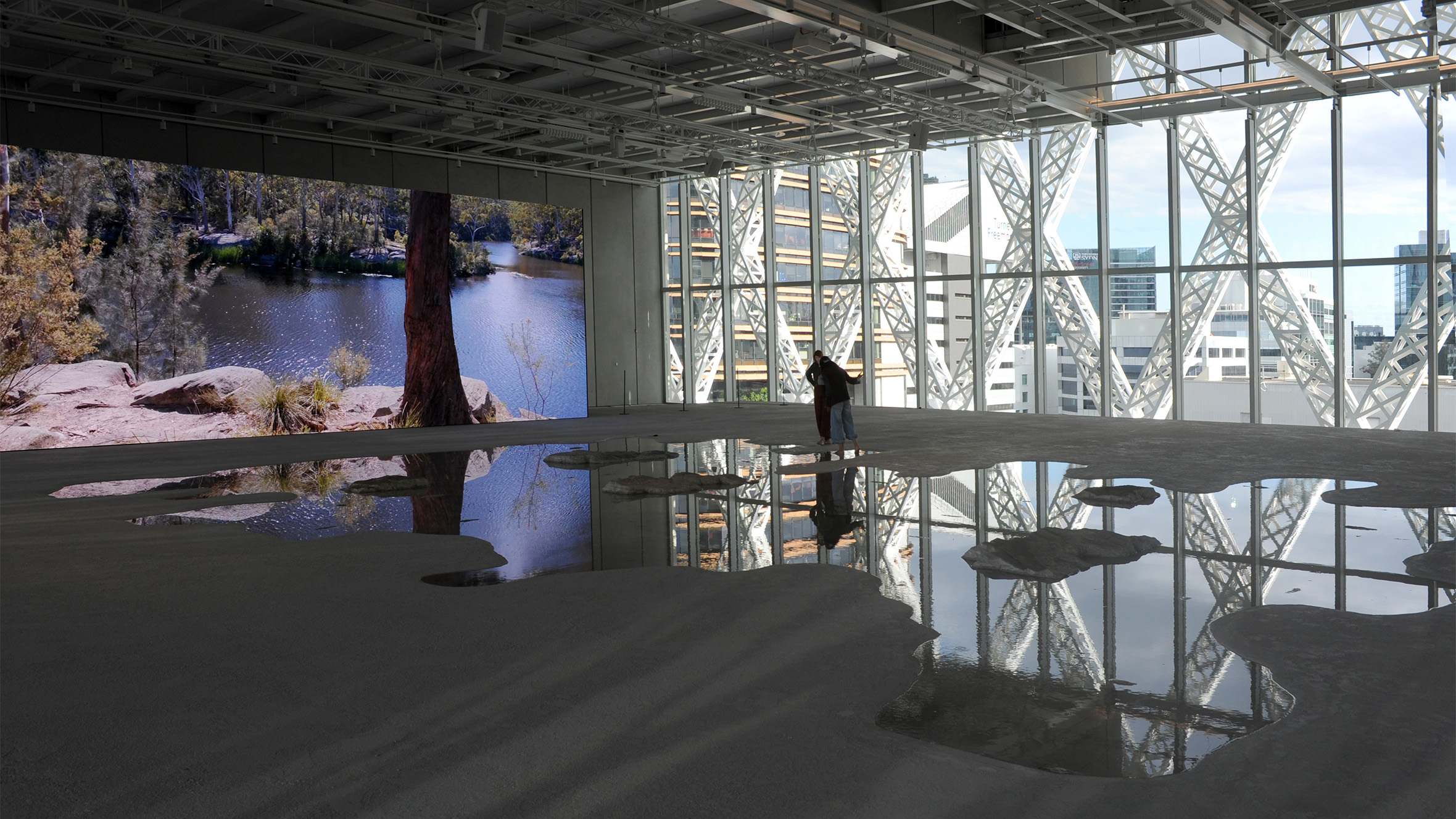
Film, water, stone and natural light immerse the visitor. Photography: Mark Tyrrell
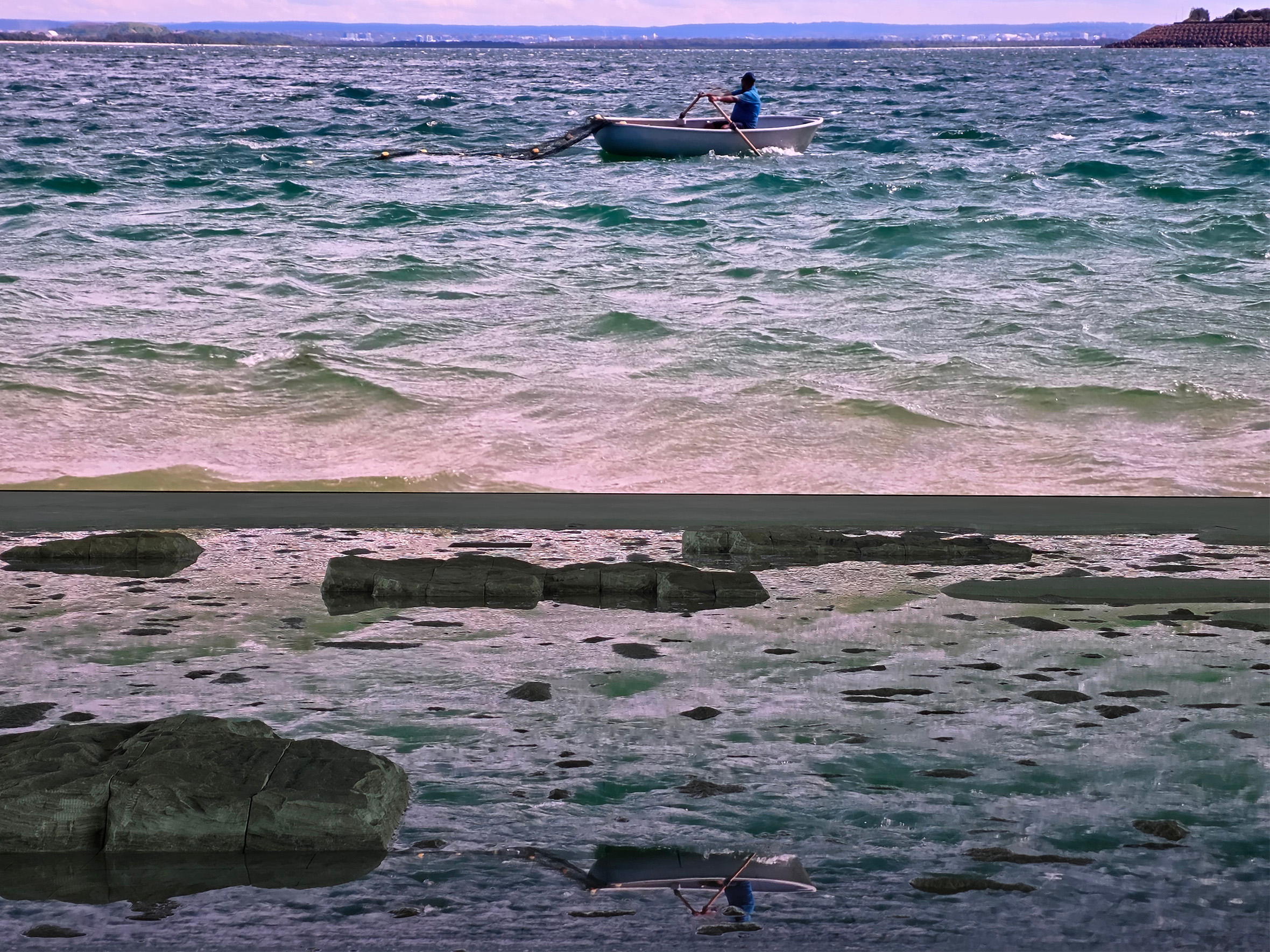
The water body is tidal. As the tide recedes, the stone surface is slowly revealed. Photography: Mark Tyrrell
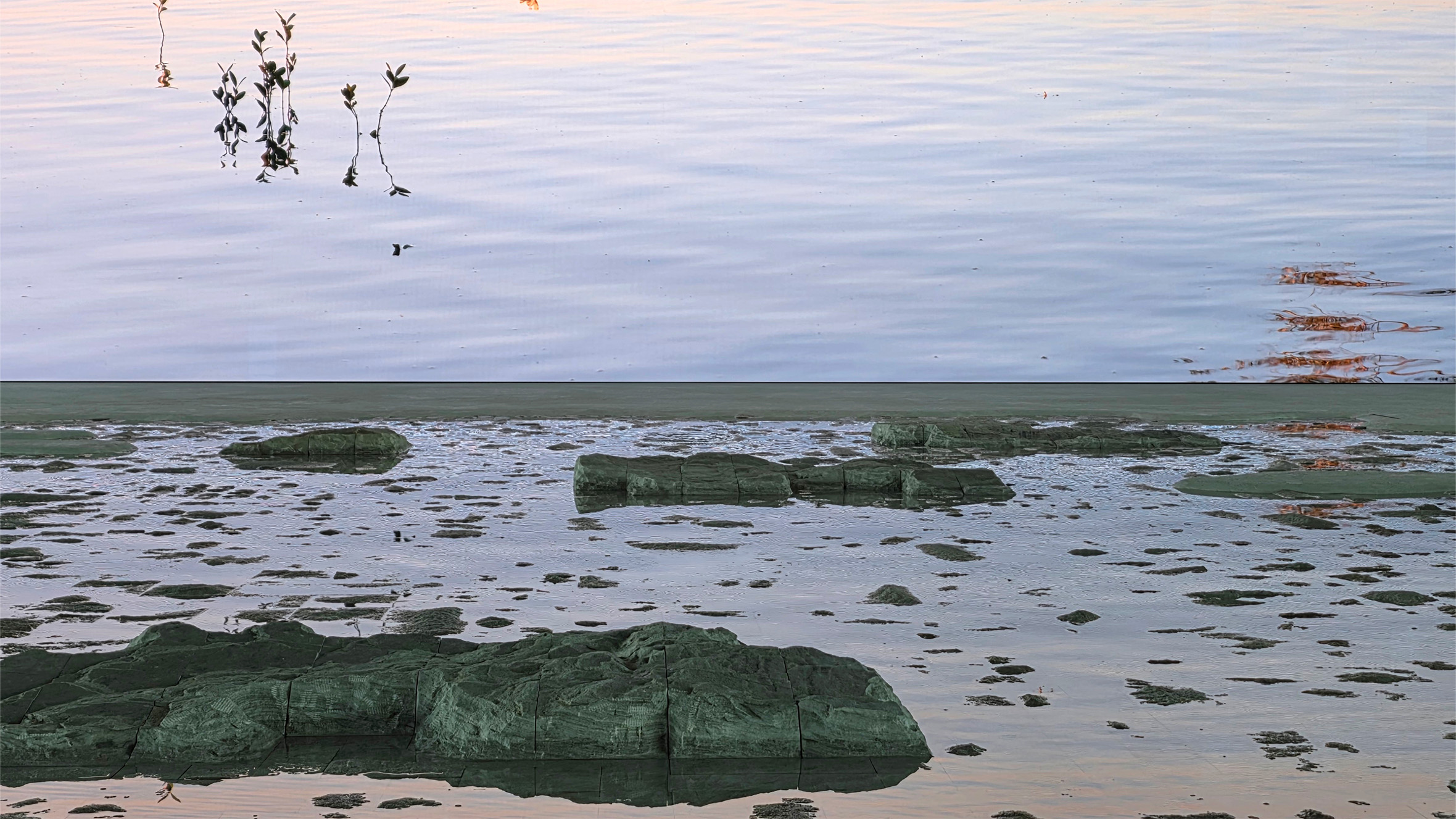
The tide recedes to leave thousands of traces across the undulating stone. It shifts and collapses scale, at once a single pool and a vast topography. Photography: Mark Tyrrell
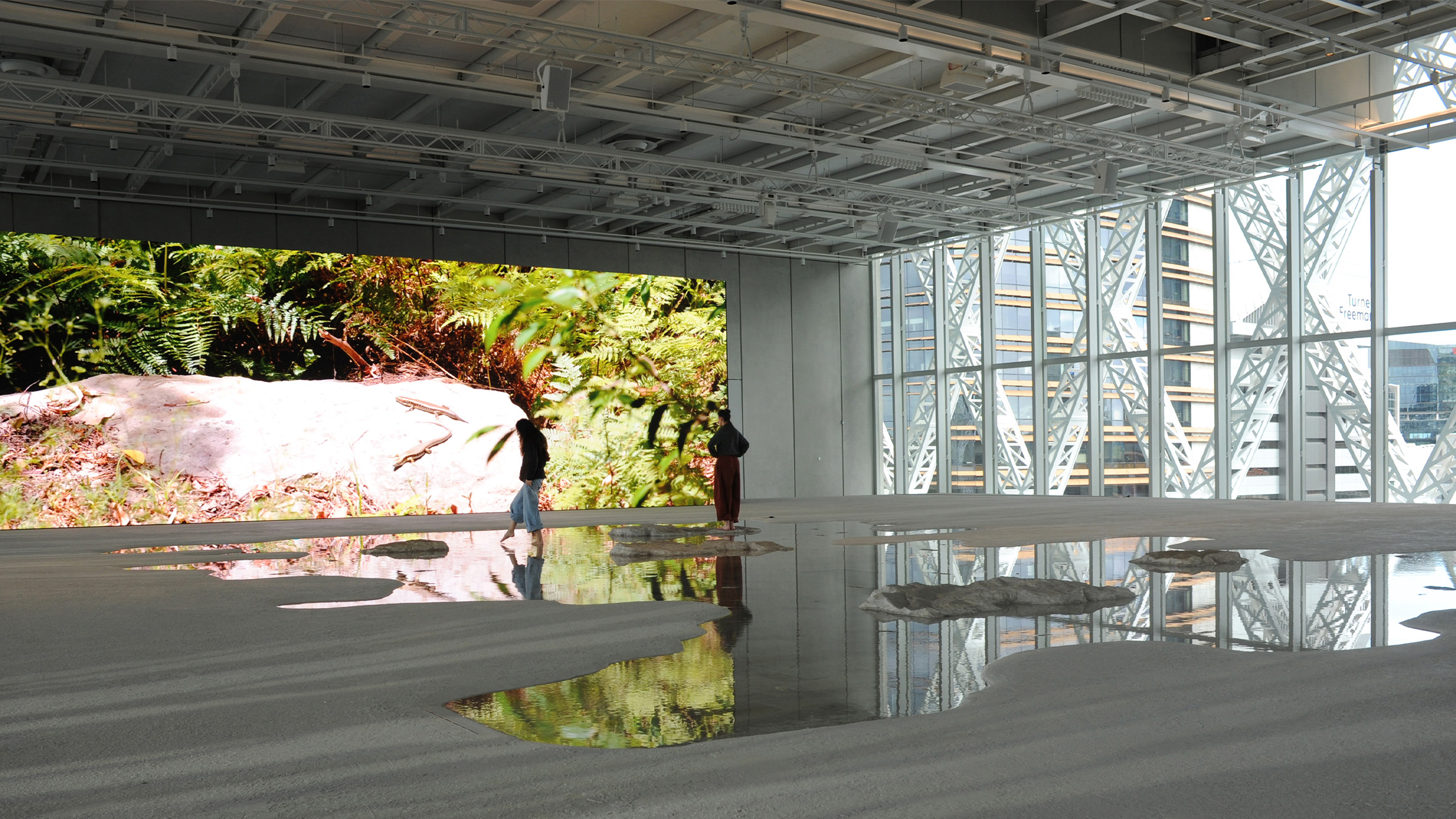
Overflow is an immersive experience that reflects cultural practice across Water Country. Photography: Mark Tyrrell
Walking on Water
Inside the immense, naturally lit museum interior, visitors remove their shoes and enter a tidal plane of water across a sculpted outcrop of 300-million-year-old Sydney sandstone. The conventional relationship between visitor and exhibition evaporates. Adults hesitate at the water’s edge. Children enter and play. People slow down. Bodies change direction. Visiting becomes dwelling.
The design seeks to fill the vast room whilst leaving it empty, giving the space back to light, water and stone. Water is the surface through which the exhibition is experienced, physically changing the visitor’s relationship with space. Water catches the architecture in reflection. Daylight moves across its surface. The tide grows until the pool becomes a mirror plane, then recedes to leave thousands of traces across the undulating stone. It shifts and collapses scale, at once a single pool and a vast topography.

Water catches the architecture in reflection. Daylight moves across its surface. Photography: Mark Tyrrell
Crossing outward
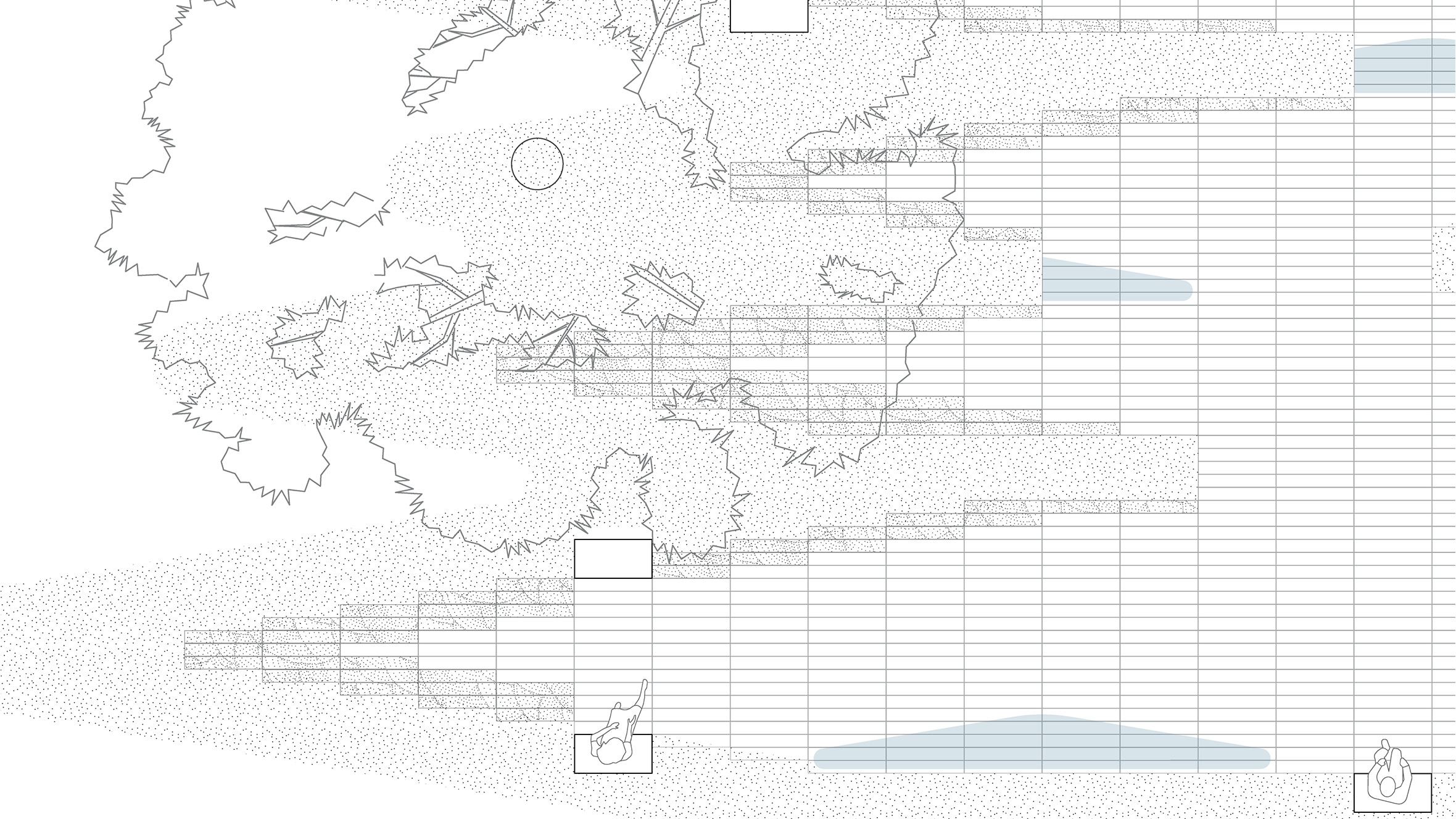
Visible from the exhibition, the permanent riverfront design works with the same elements. Sandstone, vegetation and water are woven into a constructed public terrain. Precisely cut civic surfaces meet rough, pre-weathered geological edges as the visitor steps from the granite of the Civic Link onto sandstone that reveals the underlying geology of Country. Vegetation enters the paving. Shallow depressions retain rain and slowly extend the lead-up or aftermath of flood. The landscape is constructed but never entirely fixed. Rain changes it, plants grow through it, stone weathers, floodwater enters it. Paths meander, giving different vantage points. Ngurra Budyari Ngalawagulang literally translates as a good/beautiful place to sit/visit. This is a place to slow down and be with Water Country.
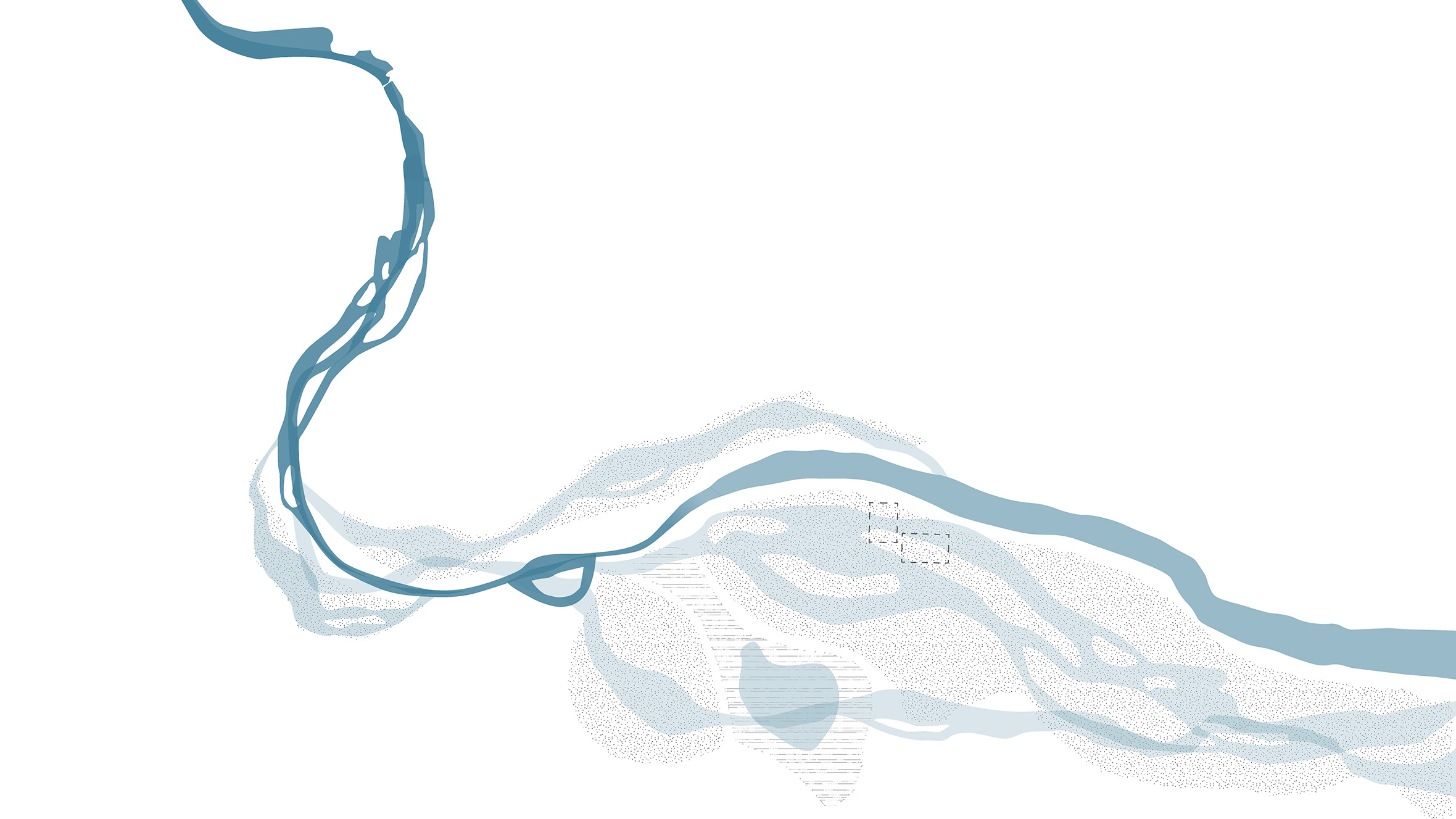
Before 1788: A dynamic water terrain. Water moved in all dimensions, though sand, sediment and rock across a terrain whose limits were never aboslute.
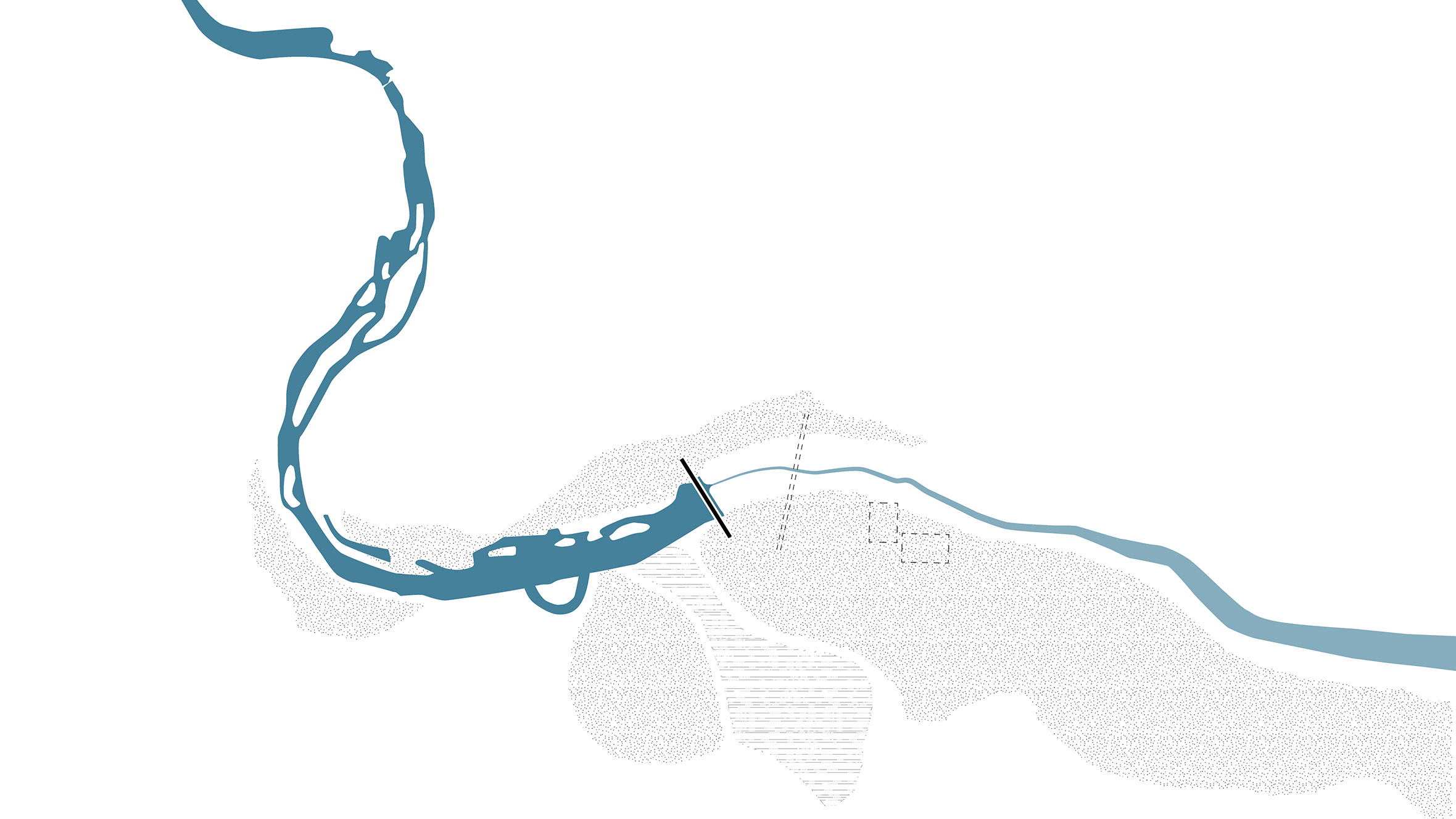
1818: A weir was ordered across the changing river flow to exclude the tide and retain freshwater. It transformed a tidal brackish watercourse into a more static body of fresh water.
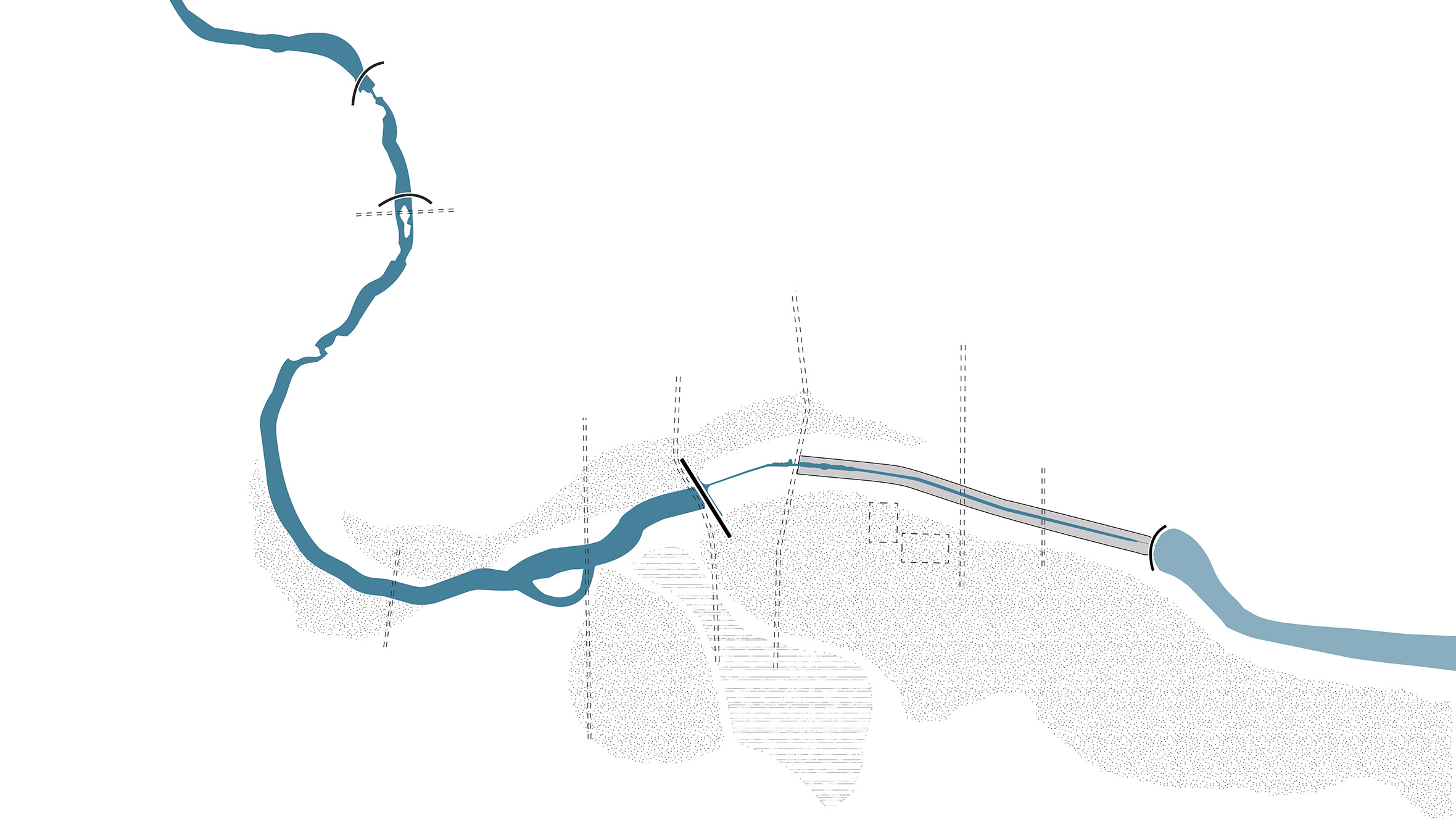
1930: Further weirs and concrete channel constructed. Tidal movement was altered and riverbanks increasingly defined.
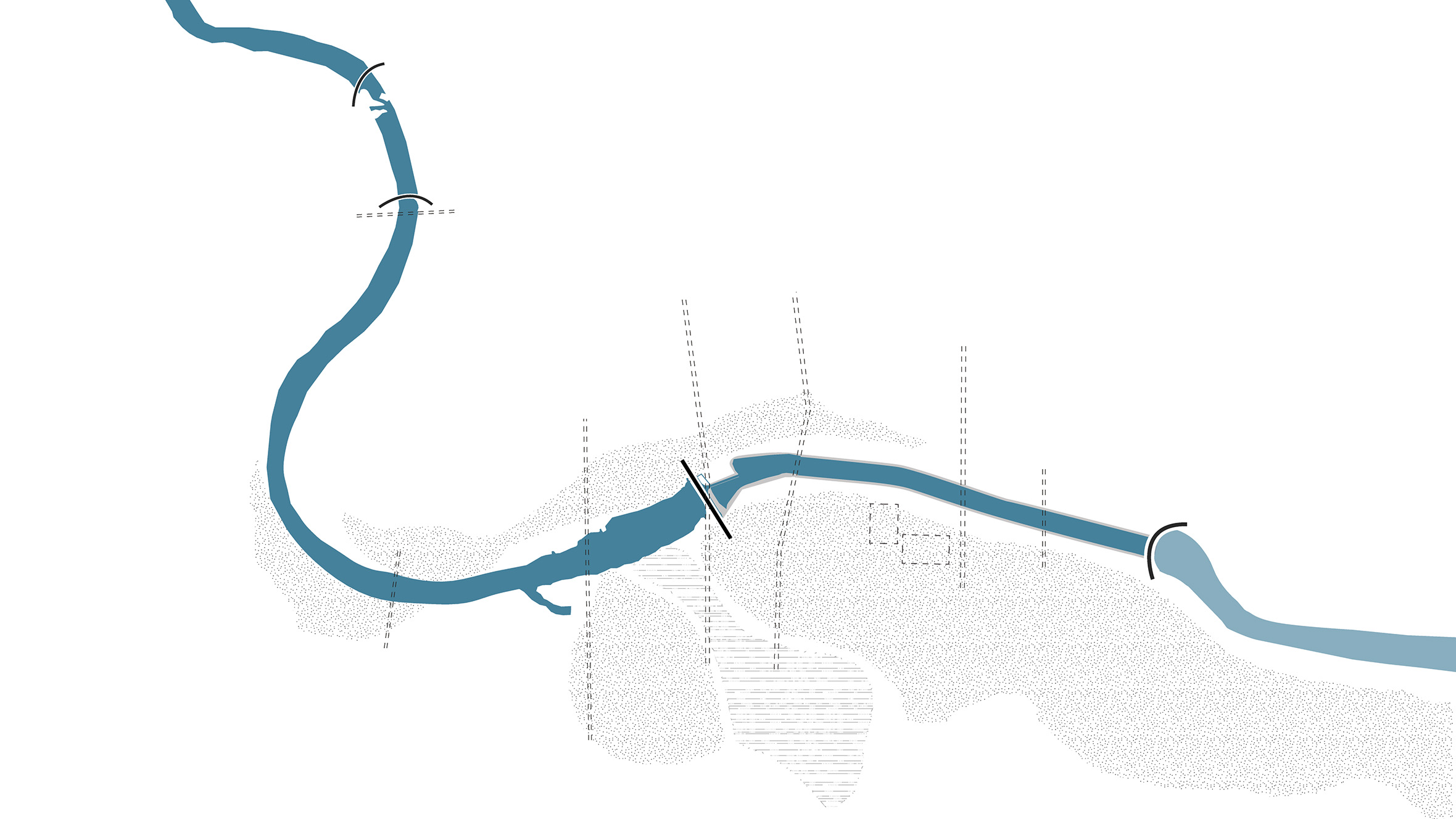
1951: Charles St weir raised. The visible channel became synonymous with the river itself: land on one side, water on the other, divided by an apparently definitive line called the riverbank.
A deep terrain of water
Parramatta has always been a deep terrain of Water Country, where salt water from the coast and fresh water from inland meet in brackish diversity. This was the Water Country of the Barramattagal. Over tens of thousands of years, the Parramatta River deposited and reworked a vast terrain of sand across the transition from sandstone to shale. Aboriginal people inhabited this changing landscape while water continued to reshape it, leaving traces of occupation within the accumulating terrain. The river was not a fixed line. Water moved in all dimensions, through sand, sediment and rock across a terrain whose limits were never absolute.
The image of the river
Elizabeth Macquarie brought British landscape pattern books to the colony and was closely involved in reshaping the Government Domain according to Picturesque principles: sweeping lawns, composed views, clumps of trees, serpentine lakes and water features.
From Government House, landscape, architecture, vegetation and river were increasingly composed as a picture. In 1818 a weir was ordered across the changing river flow to exclude the tide and retain freshwater. It provided a more reliable water supply, but also transformed a tidal brackish watercourse into a more static body of fresh water. A dynamic water terrain became a Picturesque river, both infrastructure and image.
Successive interventions sought greater control through further weirs, engineered banks and eventually concrete channels. Tidal movement was altered and riverbanks increasingly defined. An ancient landscape characterised by dynamism gradually acquired a fixed form. The visible channel became synonymous with the river itself: land on one side, water on the other, divided by an apparently definitive line called the riverbank.
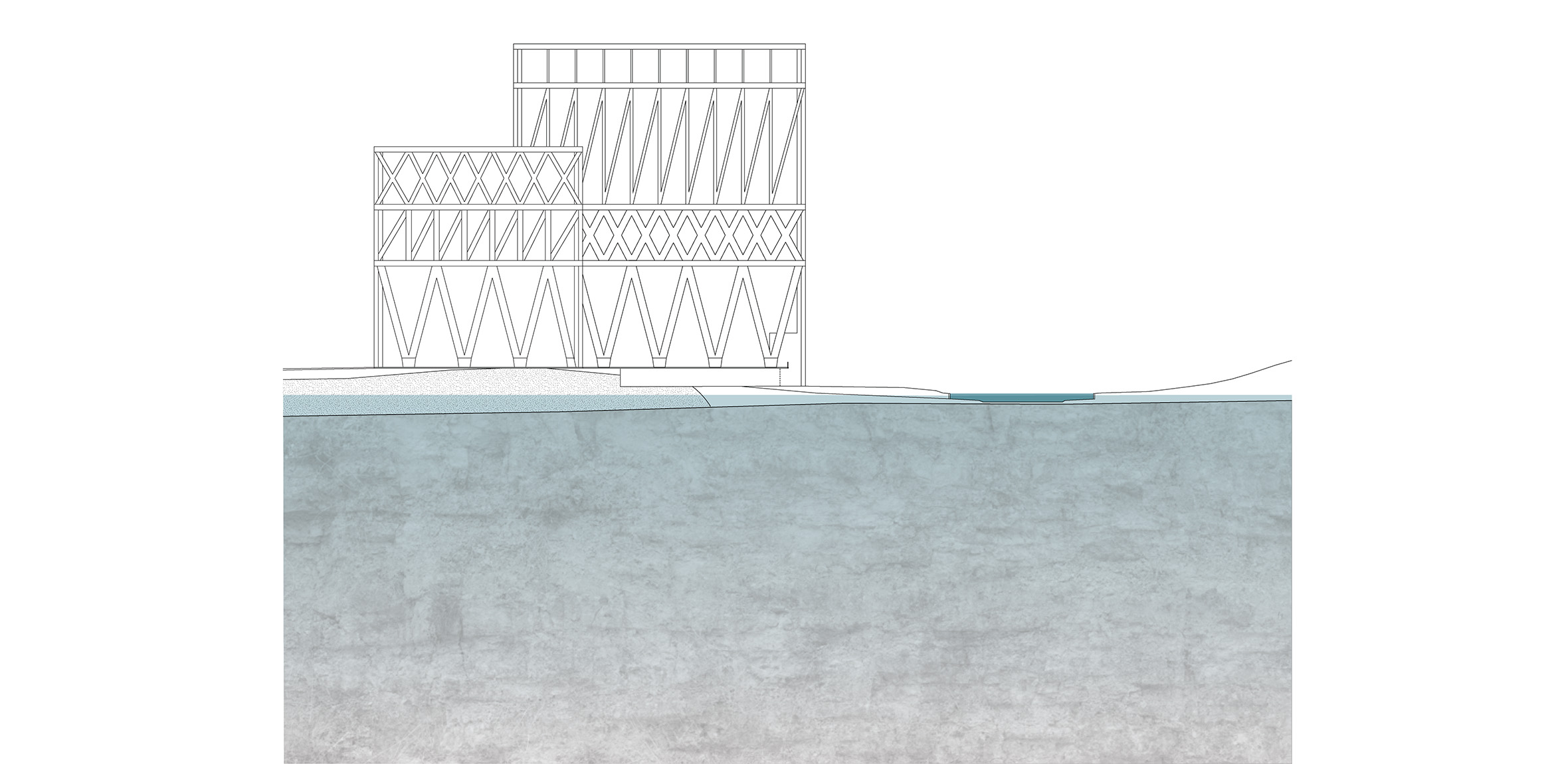
The river channel and the water table.
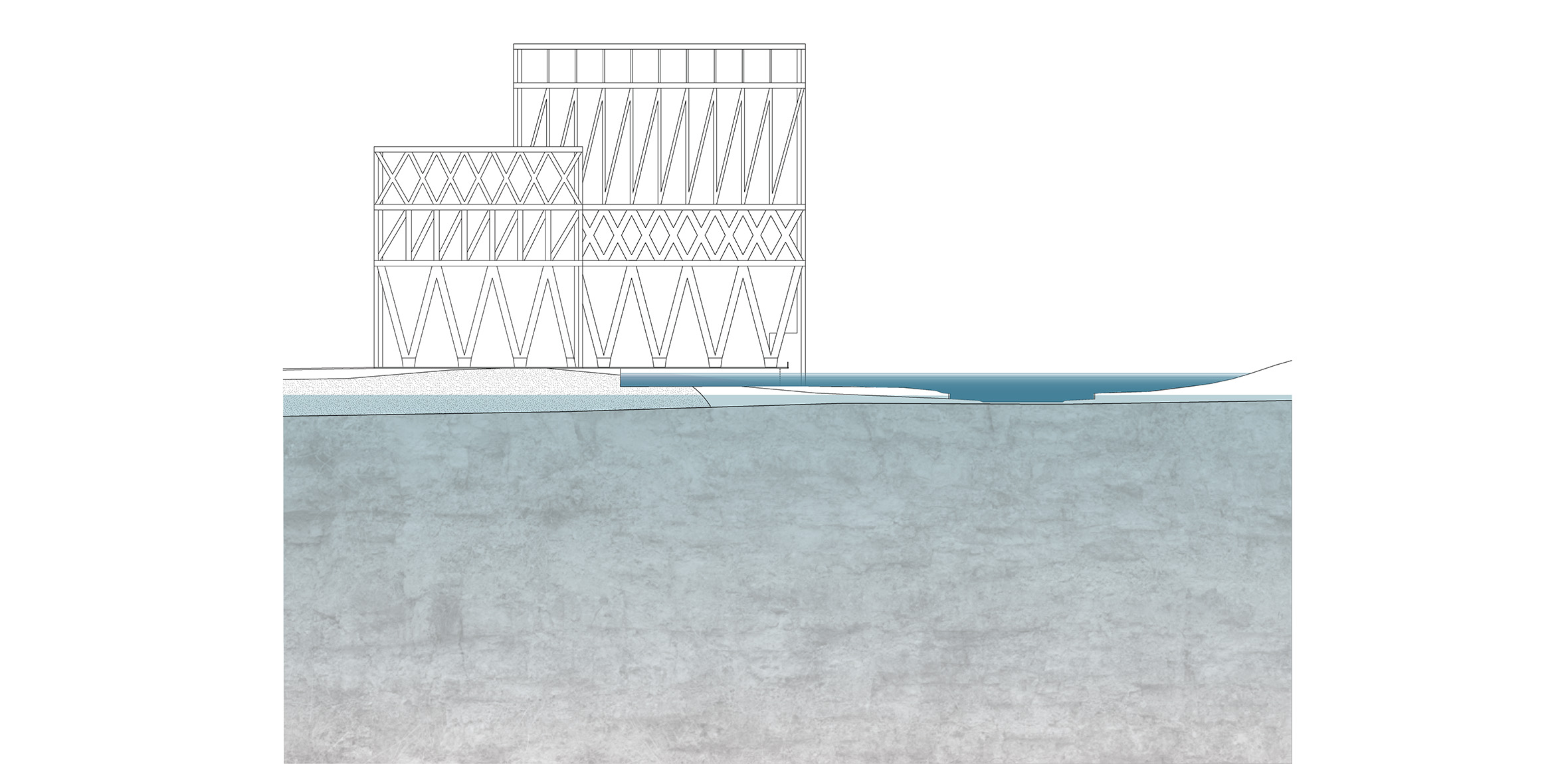
Flood is the moment when the river reveals the scale of its terrain.
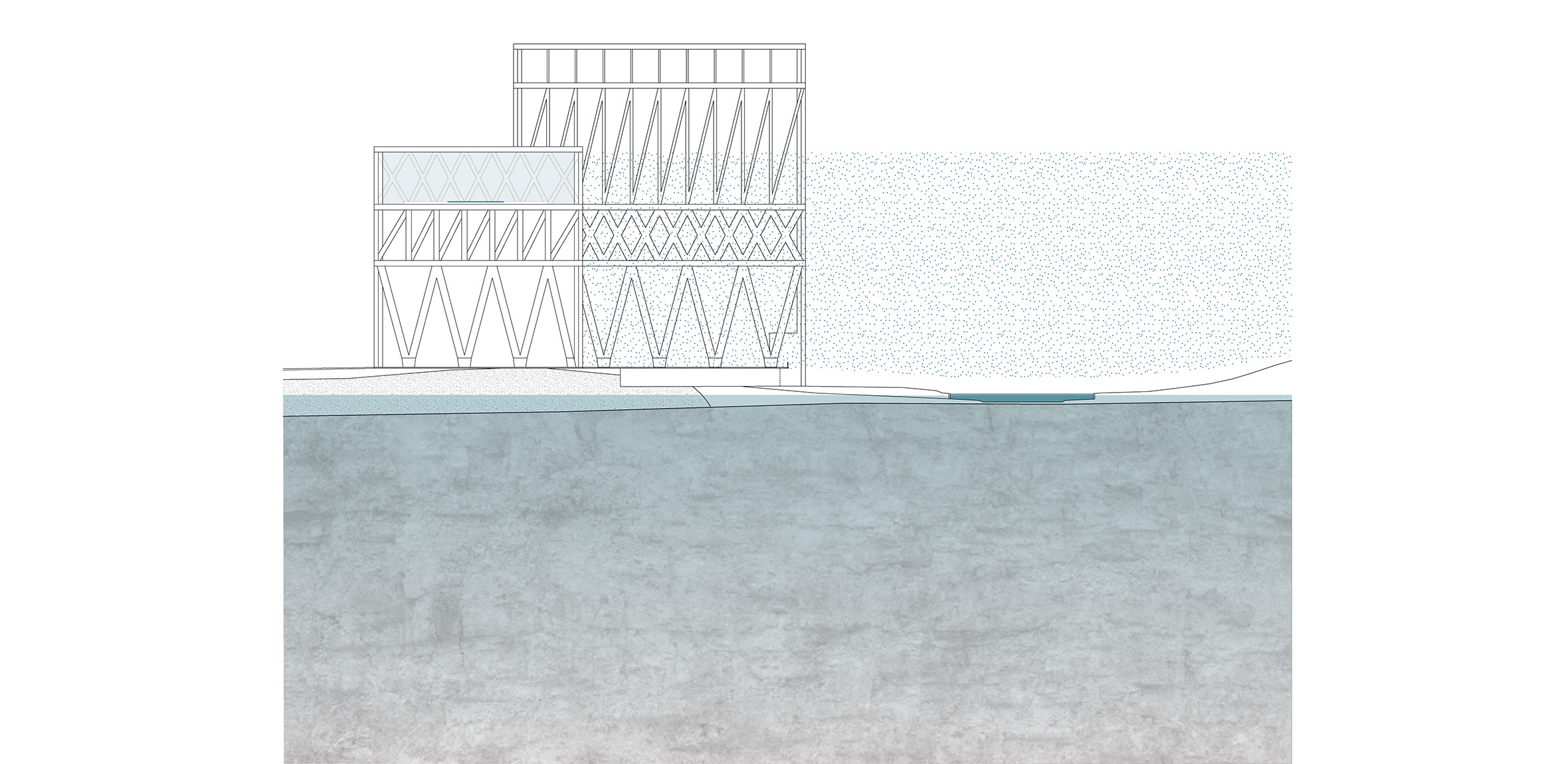
In the early morning, mist rises to the level of the exhibition space.
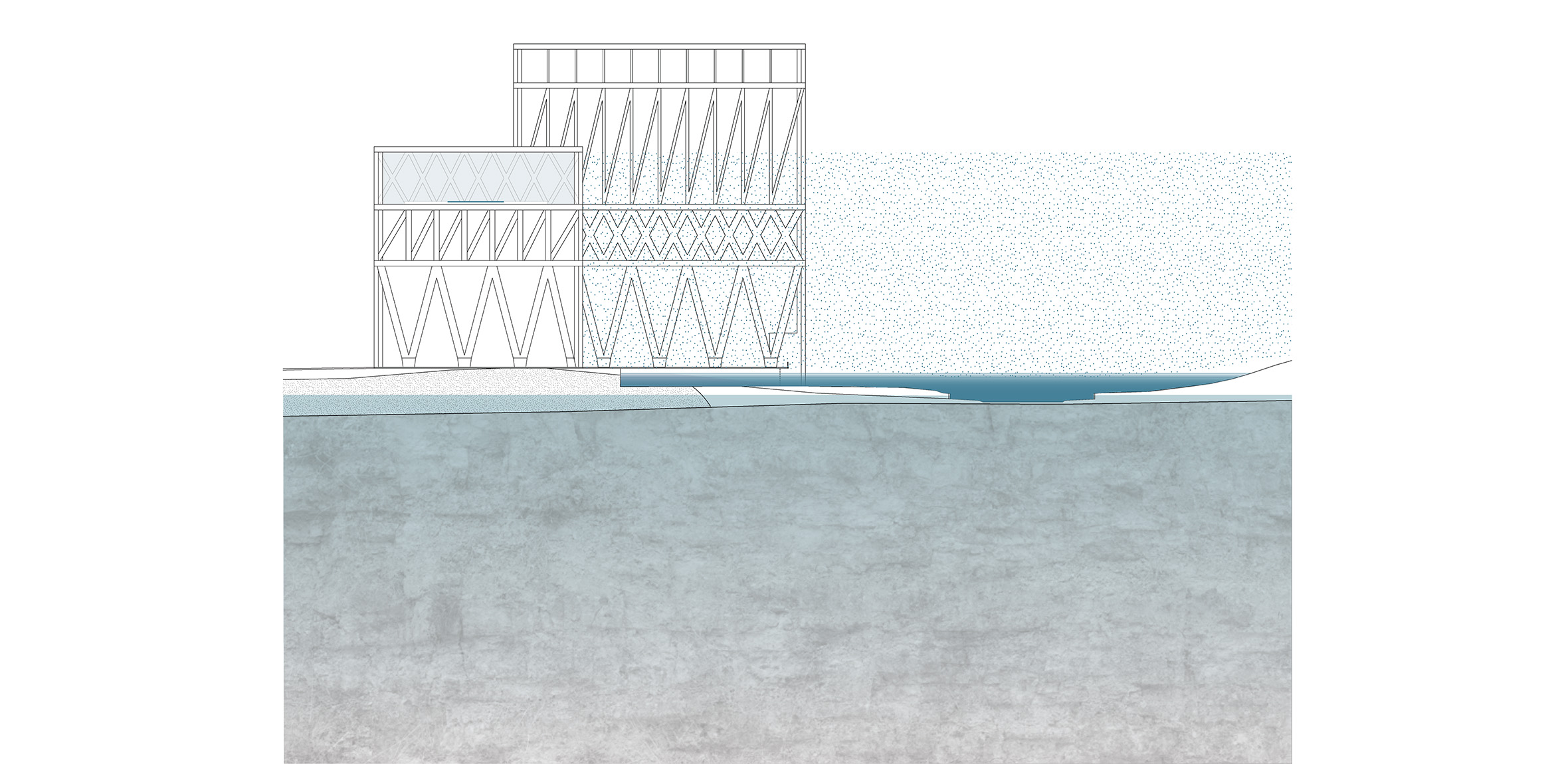
Overflow invites a relationship with the elemental forces of Water Country.
The river’s terrain
Directly beneath the river, the larger terrain of water and the living memory of its occupation remains. Sand, stone, alluvium and groundwater extend beneath the contemporary city. What appears in plan as a clearly bounded river becomes much less certain in section. The riverbank defines the visible channel. It does not define the river’s terrain. When the river periodically floods, the distinction between river and land dissolves. Flood is the moment when water Country is revealed.
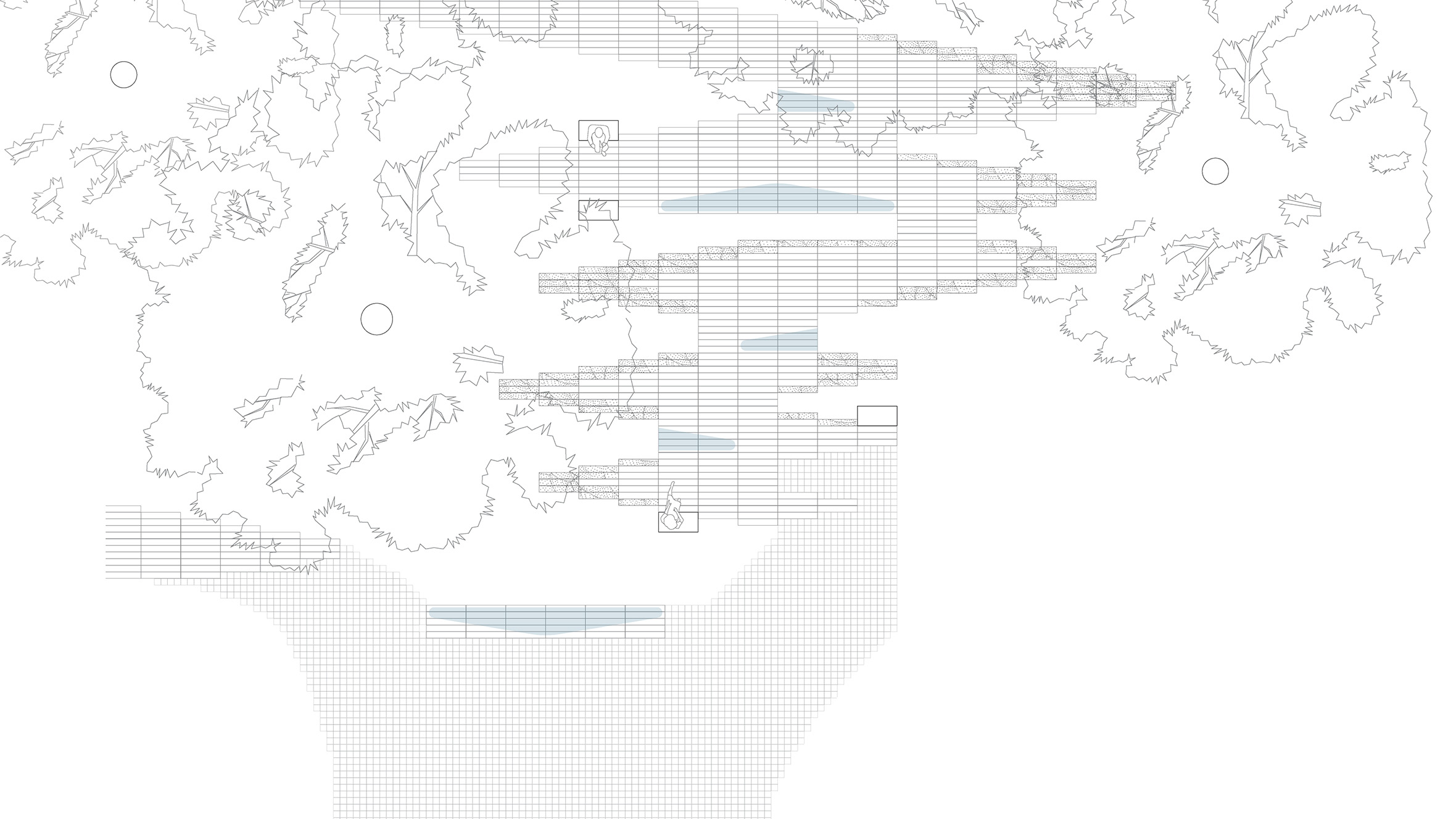
The design connects Powerhouse to Water Country creating a woven terrain of water, stone and vegetation.
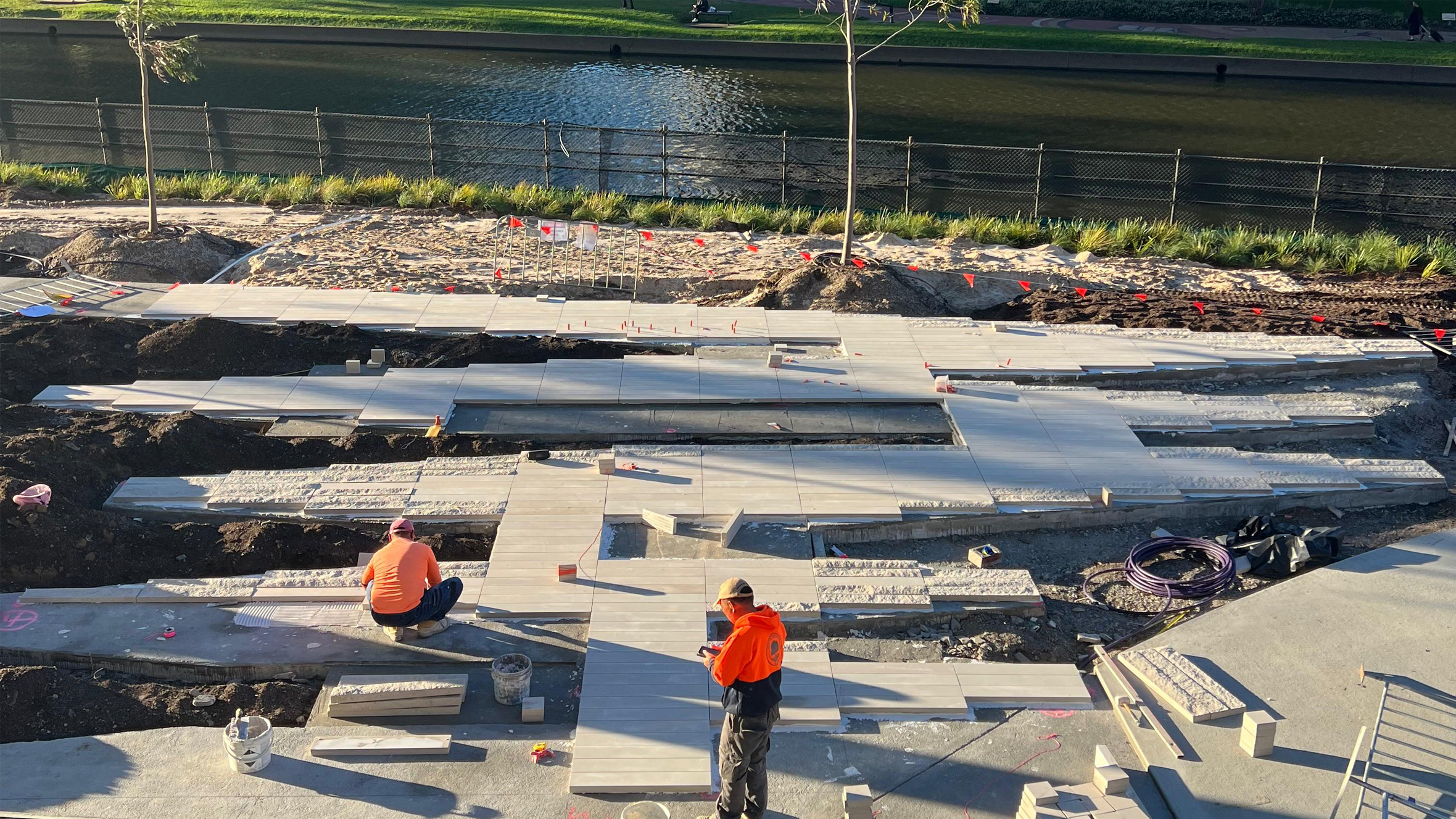
The design under construction. Photography: Mark Tyrrell
Design makes Water Country perceptible
Tyrrell Studio’s design seeks to make this larger terrain perceptible at all times. It inverts the logic of the Picturesque. Rather than using design to create a naturalised image, it allows water, geology, vegetation, weather and time to act upon the order of the public domain. Water is encouraged to pool where it would usually be engineered to drain. Alluvium gathers in stone and vegetation interrupts the civic surface. Rain changes the landscape. Precisely cut sandstone gives way to rough, pre-weathered edges that will continue to change with water and time. The design is less interested in representing the river than in allowing the forces of the river to act upon the landscape.
Returning Within
Overflow carries this investigation across the architectural threshold. Its Country-centred curatorial foundations asked how the museum might make space for Country rather than simply represent it. The exhibition is neither an image of the Parramatta River nor a reconstruction of a lost landscape. Water, stone, light and the body instead make the elemental forces of Water Country physically present in interior space.
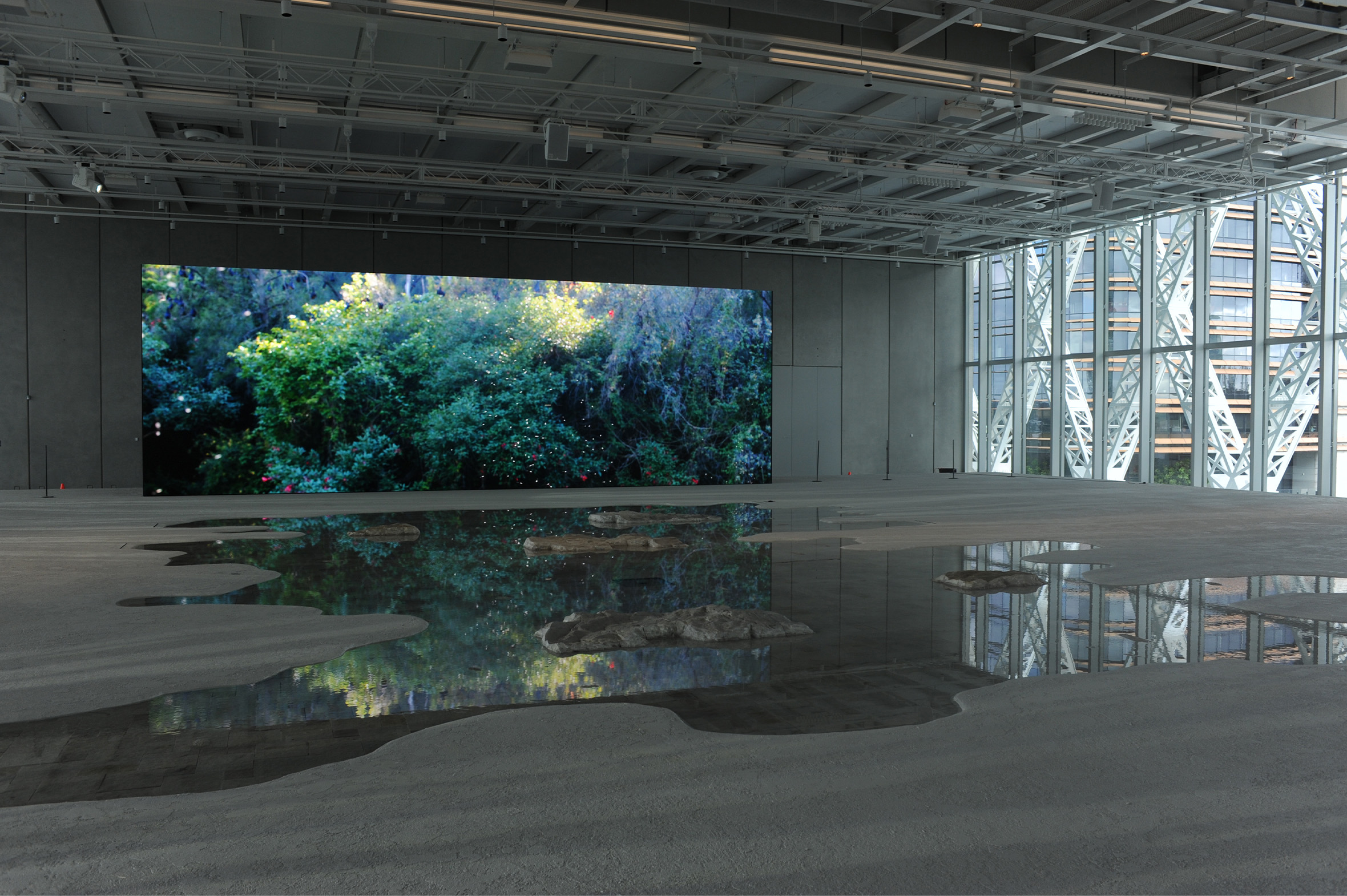
The tidal pool mirrors films made with Aboriginal communities. Photography: Mark Tyrrell
Water carries knowledge
Films made with communities and cultural organisations connected to Water Country across New South Wales bring voices, places, knowledge and cultural practices into the museum. Images fall across the water, break apart across ripples and reform across stone and the bodies of people standing within it. Visitors stand barefoot in water over ancient stone on the top floor of a building in Parramatta while stories of Water Country from elsewhere swim around them. Water becomes simultaneously the subject of the films, the material of the exhibition and the surface through which those stories enter the room.
Water Country moves from the Parramatta River, through the riverfront and into the museum. Stories of Water Country from across New South Wales move through film and light towards Parramatta. They meet in the water of Overflow. The river exceeds its banks, rain remains within stone, vegetation breaks through the constructed surface, mist rises into the morning atmosphere, landscape enters architecture, images escape their screens through reflection. Stories from elsewhere enter this water in Parramatta. The physical setting is intensely particular: water, stone, light, bodies, Parramatta. But the system to which it belongs is vast. Water finds no boundaries between river, landscape, architecture, image and body. This is Overflow.

Reflections of Ivan Sen’s video installation at low tide. Photography: Mark Tyrrell
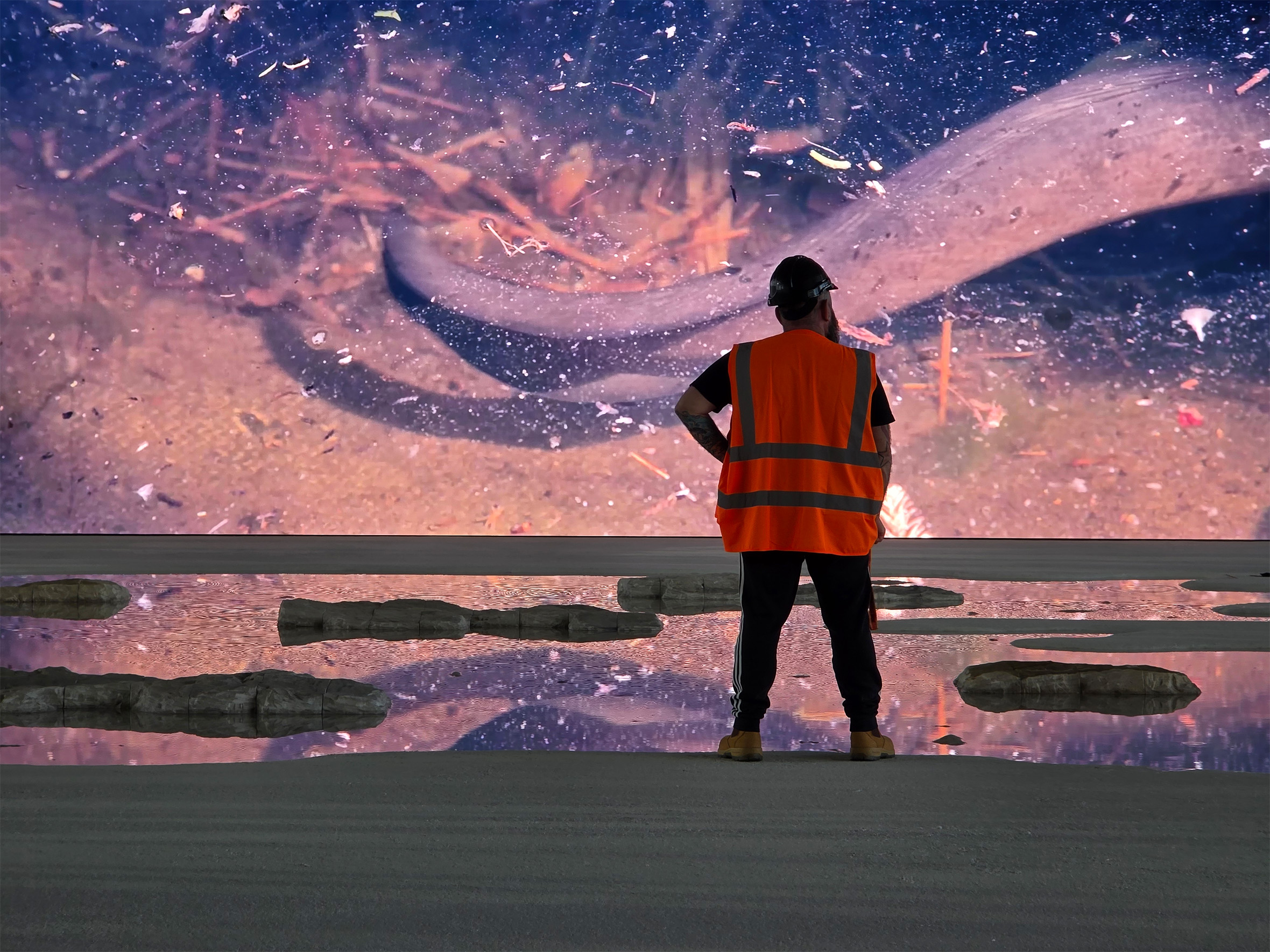
Powerhouse Director First Nations Beau James inspects the exhibition prior to opening day. Photography: Mark Tyrrell
Interested in learning more about Tyrrell Studio? Get in touch.